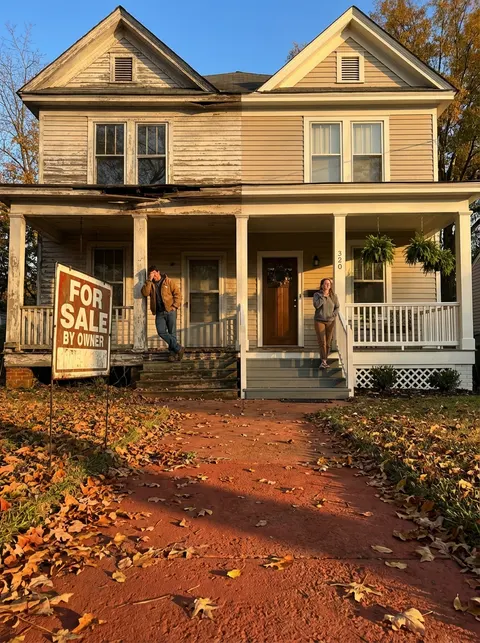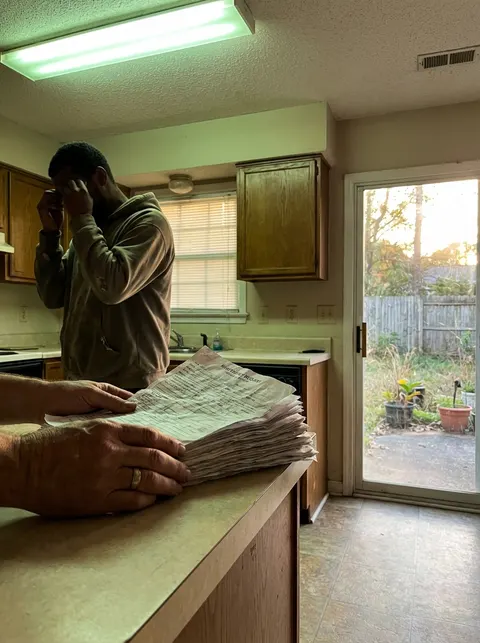
You know the cost of holding rental property in NC isn't just the mortgage. You've felt it. The 2am text about a broken water heater. The month where rent was late again. The property tax bill that jumped 12% because your county reassessed. Somewhere between the dream of passive income and the reality of owning a rental, the math stopped working. And you're starting to wonder if it ever really did.
If you're a landlord in North Carolina carrying a rental that's draining you more than it's paying you, this article is the honest breakdown you haven't been able to find. No motivational talk about "building wealth." No vague advice to "hold for the long term." Just the real numbers, line by line, so you can see what this property is actually costing you every month.
If any of that hits home, keep reading. The math might surprise you. Or it might confirm what you've been feeling for a while.
What Does Holding a Rental Property in NC Actually Cost Each Month?
Most landlords know their mortgage payment. But the true cost of holding rental property in NC goes well beyond principal and interest. Let's break it down using a $200,000 rental property as our example. This is a common price point for single-family rentals in Raleigh, Durham, Greensboro, and many other NC markets.
The monthly expense breakdown
Mortgage payment (principal + interest): $1,200/month. This assumes a remaining balance of about $160,000 at a 6.5% interest rate on a 30-year loan. Your number may be higher or lower, but this is typical for NC rentals purchased in the last few years.
Property taxes: $200/month. North Carolina's average effective property tax rate sits around 0.80% to 1.00%. On a $200,000 assessed value, that's roughly $1,700 to $2,000 per year, or about $150 to $167 per month. We'll use $200 to account for rising assessments across Wake, Durham, and Guilford counties.
Homeowner's insurance: $125/month. Landlord insurance policies in North Carolina typically run $1,200 to $1,800 per year for a $200K property. We're using $1,500 annually.
Vacancy reserve (8%): $120/month. Even good rentals sit empty sometimes. Between turnover, cleaning, and finding a new tenant, the national average vacancy rate for single-family rentals is 6% to 10%. In NC, 8% is a fair assumption. On $1,500/month rent, that's $120 you should be setting aside each month. Most landlords don't.
Maintenance reserve (1% of value per year): $167/month. The general rule is to reserve 1% of your home's value each year for maintenance and repairs. On a $200K property, that's $2,000 per year, or $167 per month. This covers the things that break. Appliances, HVAC, plumbing, roofing patches, pest control.
Capital expenditure reserve: $100/month. This is separate from maintenance. This is for the big stuff. A new roof ($8,000 to $12,000). A new HVAC system ($5,000 to $8,000). A water heater ($1,500). These don't hit every year, but when they do, they hit hard. Setting aside $100/month means you have $1,200/year building toward the next major replacement.
Property management (if applicable): $150/month. If you're paying a property manager, the standard fee in North Carolina is 8% to 10% of collected rent. On $1,500/month rent, that's $120 to $150. Even if you manage it yourself, your time has a cost. But we'll include the fee here for landlords who are paying someone.
Mortgage: $1,200 + Taxes: $200 + Insurance: $125 + Vacancy: $120 + Maintenance: $167 + CapEx: $100 + Management: $150 = $2,062 per month. If your rent is $1,500/month, you're losing $562 every single month. That's $6,744 per year out of your pocket.
And that's with a tenant paying on time. If your tenant is late, paying partial rent, or you're dealing with an eviction in North Carolina (which takes 30 to 60 days on average), those losses compound fast.
What Happens If You Hold for 12 More Months?
Let's say you tell yourself what many landlords say: "I'll hold on one more year. The market might improve. Maybe I'll get a better tenant." Here's what that year actually looks like with our $200K example.
12 months of net losses: $6,744. That's $562/month times 12 months. This is money leaving your bank account, not building equity.
One vacancy turnover: $3,200. Between one month of lost rent ($1,500), turnover cleaning ($400), minor repairs for tenant damage ($800), and marketing to find a new tenant ($500), one turnover costs you at least $3,200. Over 12 months, you're nearly guaranteed at least one.
One surprise repair: $2,500. In any 12-month stretch, something goes wrong. A busted water heater, a plumbing backup, an electrical issue. Budget a minimum of $2,500 for the thing you don't see coming.
Your time: Priceless, but let's put a number on it. Between tenant calls, coordinating repairs, dealing with late rent, and managing the property, most self-managing landlords spend 5 to 10 hours per month on a single rental. At $50/hour (a modest number for what your time is worth), that's $3,000 to $6,000 per year.
Monthly losses: $6,744 + Turnover: $3,200 + Surprise repair: $2,500 + Your time: ~$4,500 = $16,944 to hold this property for one more year. That's not counting any appreciation you might gain, which is uncertain. It also doesn't count the mental weight of carrying a property that's draining you.
The Real Cost of Holding Rental Property NC Landlords Miss
Numbers on paper are one thing. But there's a cost that doesn't show up on any spreadsheet, and it's the one that wears you down the most.
It's the Sunday night knot in your stomach wondering if rent will show up Monday. It's the phone call at dinner about a clogged toilet. It's the argument with your spouse about whether to fix the fence or just let it go another year. It's the way you feel every time someone says "must be nice to have a rental property" and you want to scream.
Being a landlord was supposed to build wealth. For some people, it does. But when the math stops working and the stress keeps building, holding on isn't investing. It's just paying for a problem you're allowed to walk away from.
That mental load has a real cost. It affects your sleep, your relationships, your ability to focus on your actual job or your family. And it ends the day you decide you're done.
"Ryan was a pleasure to work with. He made it quick and easy to sell my investment property with no hassle!" — Robert Eckert, Google review
What Does Selling Now Actually Look Like?
Let's compare the two paths. Same $200K rental property. Same numbers. Just two different decisions.
Path A: Hold for 12 more months, then sell
You absorb $16,944 in holding costs over the next year. You hope the property appreciates. In a normal NC market, residential properties appreciate about 3% to 4% per year. On a $200K property, that's $6,000 to $8,000 in added value. But you spent $16,944 to hold it. Net result: you're $9,000 to $11,000 worse off than if you sold today. And that's if everything goes right. No major repair. No bad tenant. No eviction.
Path B: Sell now with a cash offer
You sell the property as-is. No repairs. No cleaning. No tenant removal. No agent commissions. No staging or showings. You close in as little as seven days, or whenever works for your schedule. The money from the sale goes into your account. The monthly drain stops immediately. You can read more about how to sell a rental with tenants in NC if that's your situation.
Even if a cash offer comes in below what you'd get on the open market, the gap is often smaller than people think once you subtract agent commissions (5% to 6%), closing costs, repair concessions, and 60 to 90 days of carrying costs while the house is listed. For a deeper look at that comparison, see Cash Offer vs. Listing: The Real Numbers.
| Cost Category | Hold 12 More Months | Sell Now (Cash) |
|---|---|---|
| Monthly net losses | $6,744 | $0 |
| Vacancy turnover | $3,200 | $0 |
| Surprise repairs | $2,500 | $0 |
| Your time (5-10 hrs/mo) | ~$4,500 | $0 |
| Agent commissions | 5-6% at eventual sale | $0 |
| Total cost to you | $16,944+ | $0 |

NC Landlords Are Making This Decision Every Week
At Cinch Home Buyers, we've purchased over 200 properties across 13 North Carolina markets. A large portion of those were from landlords who ran the math, saw what holding was really costing them, and decided they were done. We've bought rentals in Wake County, Johnston County, Durham, Greensboro, and throughout the Triangle.
We buy properties as-is and occupied. That means you don't have to wait for your tenant's lease to end. You don't have to fix anything. You don't have to clean out the property. We handle all of it. And we can close on your timeline, whether that's next week or next month.
Every situation is different. Some landlords have strong equity and walk away with a meaningful check. Others are close to break-even and just need the relief of being free from the monthly grind. Either way, we lay out every number clearly so you know exactly where you'd stand before making a decision.
If you're ready to see what your rental is worth and what walking away would actually look like, filling out our quick form takes about 60 seconds. No obligation. No pressure. Just a straightforward look at the numbers so you can make the decision that's right for you.
We buy houses across Wake, Johnston, and Edgecombe counties, and we can move on your timeline. You've done your part. Now it might be time to let this one go.