You inherited a house, you're grieving, and every search result is either an attorney writing for other attorneys or a national site that doesn't know North Carolina law from Nevada's. This guide is different: it's written for heirs who just want the house handled — by an investor who has bought estate properties across North Carolina and sat at closing tables with executors, heirs, and their attorneys through 250+ NC closings since 2021.
Nothing here is legal advice; North Carolina is an attorney-closing state, so a licensed attorney will be involved in your sale no matter what. That's actually good news — it means you don't have to get this perfect on your own. But walking in understanding the five ideas below will save you weeks and real money.
Is Probate Mandatory in North Carolina? (The Answer Most Sites Get Wrong)
Here's the piece of NC law that surprises almost every heir: real estate is different from everything else in the estate.
In North Carolina, when someone dies, their real property generally vests in the heirs (or devisees under a will) immediately at death — title passes by operation of law, not by a probate court handing it over. Bank accounts, cars, and personal property go through the estate administration; the house, in a legal sense, is already yours (and your co-heirs').
So can you skip probate and just sell? Sometimes — but there's a catch, and it has a number on it.
The 2-year rule every heir seller must understand
For two years after the date of death, the deceased's creditors have a claim that can reach the real estate. If heirs sell within that window without an estate administration, the buyer's title (and therefore your sale) is exposed to those creditor claims — which is why many title insurers and closing attorneys won't insure an early heir sale without protections.
The standard fix: open the estate, and the personal representative publishes a notice to creditors. Creditors then have 90 days from first publication to file claims. Once that window runs and valid claims are handled, the house can be sold with clean, insurable title — long before the two years are up. Selling within two years of death without that creditor process is where heir sales fall apart at the closing table.
Translation: probate of the house isn't always "mandatory" in NC — but a creditor-safe process almost always is, and the 90-day notice is usually the fastest route through, not a detour.
The Tax Break Nobody Tells Grieving Families About: Stepped-Up Basis
When you inherit property, your cost basis for capital-gains tax resets to the fair market value at the date of death — not what your parents paid decades ago.
Illustration of the mechanics (example numbers, not a real deal): if a parent bought a house long ago for $60,000 and it's worth $250,000 at death, the heirs' basis is $250,000. Sell it soon after for around $250,000 and the taxable gain is at or near zero — even though the family's "profit" over the decades was enormous. Sell years later after more appreciation, and you owe gain only on the rise above the date-of-death value.
Two practical consequences:
- Get a date-of-death value on record (appraisal or solid comparable analysis) — it's the number your entire tax outcome hangs on.
- Selling reasonably soon after death is often tax-efficient, which surprises families who assume they should hold "to avoid taxes." It's usually the opposite.
Don't let anyone tell you a fast estate sale is automatically a tax mistake. Usually it's the cleanest tax event the property will ever have — but every family's numbers are different, so verify yours.
Multiple Heirs: Every Owner Signs, or Nothing Closes
If the house passed to three siblings, all three own undivided interests, and every heir (and, in many cases, their spouses) must sign the deed. One holdout, one heir nobody can locate, one sibling in another state who won't return the notary's calls — and your sale is stuck.
This is the single most common reason inherited houses sit for years. We've written detailed playbooks for both versions of the problem: selling a house with multiple heirs in NC and the harder case, selling heir property without clear title — missing heirs, no probate ever opened for a prior generation, or a co-owner who won't sign and the partition-action risk that follows.
The short version: these are curable problems, the closing attorney's title work identifies exactly what's needed, and a buyer who has closed messy estate deals (that's us) will wait out the cure instead of walking at the first title exception.
The Realistic Timeline
| Step | Typical time | Notes |
|---|---|---|
| Qualify the executor/administrator, open the estate | 1-3 weeks | Clerk of Superior Court in the county of death |
| Publish notice to creditors | 90 days from first publication | The clock that protects your sale |
| Value the house (date-of-death) | 1-2 weeks, runs in parallel | Locks in stepped-up basis |
| Contract with a buyer | Whenever you're ready | A cash contract can sit ready to close the moment title clears |
| Closing (attorney-run) | 7-14 days with a cash buyer | Mortgage payoff, liens, and estate items handled from proceeds at the table |
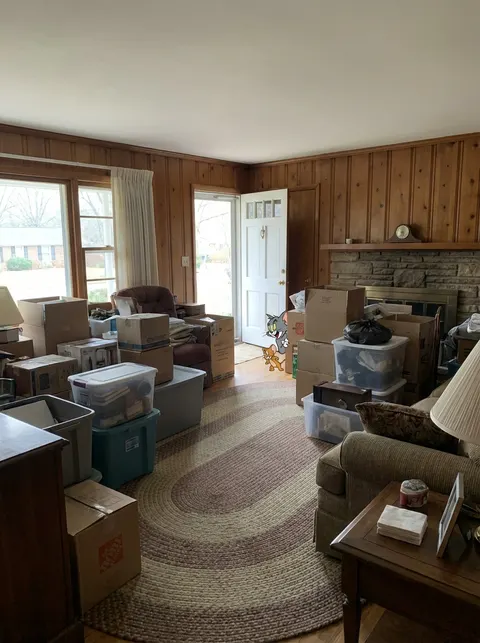
A financed retail sale layers 30-45 days of lender underwriting, an appraisal, and repair negotiations on top — on a house that's often dated, full of belongings, and three hours from where the heirs live. That's the gap a cash sale closes: we buy estate houses as-is, contents included if you want — take the photo albums, leave everything else.
A Real Family, Not a Hypothetical
We tell one estate story in full on this site — a family selling their parents' house after a death, the condition it was in, and what the process actually felt like from their side: read the story. It's there because every probate article promises "compassionate service," and we'd rather show you a fact-checked account of how one closing actually went.
The same process works no matter which county the property sits in — we buy inherited houses across North Carolina. If you're working through this in Charlotte specifically, we've written a local guide to selling an inherited house in Charlotte; in Greensboro, see selling an inherited house in Greensboro. And if the house itself is ready to sell right now rather than researched, our dedicated statewide page for that is selling an inherited house in NC.
FAQ — NC Probate and Inherited Houses
The will must be probated (filed and proven) for devisees to take clean title, and an estate administration is usually needed to run the creditor notice. But the real estate itself vests in the devisees at death — the court doesn't have to "award" it to you. What makes a sale safe is handling the creditor window, not a judge's permission to sell.
Often, yes — heirs can contract with a buyer early, and with the estate opened and the 90-day creditor notice running (or two years passed since death), the closing attorney can insure and close. What you generally can't do safely is close within two years of death with no estate process at all.
To sell the whole property by deed, yes — every owner signs. If one won't, the remaining options run through negotiation (buying out the holdout) or a court partition proceeding. Details and tactics: multiple heirs guide.
Usually far less than people fear, because of stepped-up basis: your gain is measured from date-of-death value, not the original purchase price. Sell near that value and the taxable gain is minimal. Confirm with a CPA.
The estate (practically: the heirs) carries them until closing — one more reason a 7-14 day close after title clears beats months of showings on a vacant house you're insuring from out of town.
Not to us. We buy estate houses exactly as they stand — furniture, forty years of belongings, deferred repairs, all of it. Heirs take what matters and hand us the keys.