
If you own a house in Kinston and the Neuse River has ever made you nervous, you're not alone. Lenoir County has some of the most significant flood risk in North Carolina — not theoretical risk, not "it could happen someday" risk, but the kind that's already happened. Floyd. Matthew. Florence. The Neuse River has flooded this city multiple times in living memory, and each event left its mark on the housing market in ways that are still shaping what sellers can and can't do today.
Selling a house in a Kinston flood zone isn't like selling any other property. The disclosure requirements are different. The insurance costs are different. The buyer pool is dramatically smaller. And the conventional wisdom about listing on the MLS, waiting for the right buyer, and getting market value — it often doesn't apply.
I'm Ryan Smith, founder of Cinch Home Buyers. I buy houses in Kinston — including flood zone properties and homes with flood damage history. Here's the unfiltered reality of what you're dealing with and what your real options are.
Kinston's Flood History: Why It Matters to Every Seller
Let's put the history on the table because it drives everything else.
Hurricane Floyd (1999). The Neuse River crested at over 29 feet — roughly 14 feet above flood stage. Thousands of homes in Kinston were flooded. Entire neighborhoods south of the river were bought out by FEMA and demolished. The city's population dropped significantly and has never recovered to pre-Floyd levels.
Hurricane Matthew (2016). The Neuse crested again at 27+ feet. Another round of flooding in many of the same areas that Floyd hit. Homes that had been repaired after Floyd flooded again. Some were repaired a second time. Some were abandoned.
Hurricane Florence (2018). Yet another crest above 25 feet. The third major flood event in 19 years for some Kinston properties. At this point, certain areas of Kinston have been flooded three times. The cumulative damage to the housing stock — and to buyer confidence — is substantial.
This history doesn't just affect waterfront properties. FEMA flood maps cover a wide swath of Kinston, including neighborhoods that aren't near the river but sit in low-lying areas where stormwater drainage is insufficient during major rain events. If you're not sure whether your property is in a flood zone, check FEMA's flood map tool or ask your insurance agent. The answer might surprise you.
How Flood Zone Designation Kills Traditional Sales
Here's the mechanical problem flood zone sellers face, step by step.
Step 1: The buyer's lender requires flood insurance. If the property is in a FEMA Special Flood Hazard Area (zones A, AE, V, VE), every federally-backed mortgage requires the buyer to carry flood insurance. No exceptions. This isn't a suggestion — it's a legal requirement for FHA, VA, conventional, and USDA loans.
Step 2: Flood insurance premiums have exploded. FEMA's Risk Rating 2.0 — which replaced the old rate structure — prices flood insurance based on individual property risk factors. In Kinston, this has hit hard. Properties that paid $800/year in flood insurance under the old system now pay $2,000-$4,500/year. Some pay more. That's an extra $170-$375/month added to the buyer's housing cost.
Step 3: The extra cost shrinks the buyer pool. A buyer qualified for a $120,000 house at a certain monthly payment suddenly can't afford that house when you add $300/month in flood insurance. They either reduce their price range or they look at properties outside the flood zone. Either way, your potential buyer pool shrinks dramatically.
Step 4: Flood damage disclosure scares away the remaining buyers. North Carolina's Residential Property Disclosure Act requires sellers to disclose known material facts — including flood history. A buyer who sees "property flooded in 2016 and 2018" on a disclosure form is almost certainly going to walk. Their agent will advise it. Their lender might not approve it.
The result: your house in a Kinston flood zone might as well be invisible on the MLS. The buyers who can see it can't afford the insurance. The ones who can afford it are scared off by the disclosure.
Under the old NFIP rating system, many Kinston properties carried flood insurance for $500-$1,000/year. Under Risk Rating 2.0, those same properties are seeing premiums of $2,000-$4,500+. For a buyer calculating monthly payments on a $100,000 home, that's the difference between a $750/month housing payment and a $1,050/month payment. At Kinston income levels, that extra $300/month disqualifies a significant portion of the buyer pool.
What About FEMA Buyouts?
“Our house off Queen Street flooded in Matthew and Florence. Two years on the MLS with zero offers. Cinch gave us a fair cash number, factored in the flood history, and closed in 12 days. We finally moved on.” — Linda J., Kinston
After Floyd, FEMA's Hazard Mitigation Grant Program bought out hundreds of Kinston properties in the most severely flooded areas. Those lots were converted to green space — they can never be developed again.
FEMA buyouts are still available in some cases, but the process is slow — often 2-5 years from application to payment. The amount is based on pre-disaster fair market value, which in Kinston means low numbers. And not every property qualifies. If you're in a flood zone but haven't been declared a repetitive loss property, the buyout option may not be open to you.
For most Kinston flood zone sellers, FEMA buyouts aren't a realistic near-term solution. They're a multi-year process with uncertain outcomes. If you need to sell in the next few months, you need a different path.
| Factor | Traditional MLS | Cinch Cash Offer |
|---|---|---|
| Flood Insurance Hurdle | Buyer’s lender requires $1,500–$4,500+/yr policy | No insurance required to close |
| Flood Damage Disclosure | Scares away most remaining buyers | Priced into our offer — no deal-killers |
| FEMA Buyout Alternative | 2–5 years, uncertain qualification | 7–14 days, guaranteed close |
| Repetitive Loss Properties | Virtually unsellable on MLS | We buy regardless of flood event count |
Cash Sales: The Realistic Option for Kinston Flood Zone Properties
Cash buyers don't need mortgages. We don't need flood insurance to close. We don't need a bank to approve the loan based on the property's flood zone designation. The FEMA map is information — it affects our repair estimate and our risk calculation — but it doesn't kill the deal the way it kills a traditional sale.
Here's how we approach Kinston flood zone properties:
We factor in the flood risk. The offer reflects the property's location, elevation, flood history, and the cost of any flood-related repairs. We're not ignoring the risk — we're pricing it honestly.
We factor in the reduced resale pool. We know that the eventual buyer (when we resell or rent) will face the same flood insurance costs. That affects our after-repair value estimate and our offer.
We close fast. 7-14 days. Same timeline as any cash sale. No waiting for FEMA elevation certificates, no waiting for insurance quotes, no waiting for a buyer's lender to approve a flood zone property.
Is the offer lower than what a non-flood-zone property would get? Yes. The flood risk is a real cost that gets factored in. But compare that offer to the alternative — 6-12 months on the MLS with no offers, carrying costs compounding every month, and a property that's potentially one storm away from flooding again.
What You Need to Have Ready to Sell a Kinston Flood Zone Property
If you're considering selling your Kinston flood zone property — to us or to anyone — here's what helps:
- Flood history documentation. Dates of any flood events, NFIP claims filed, repair work completed. The more documented, the more accurately we can assess condition.
- Current flood insurance policy. Shows your zone designation, premium, and coverage. Helps us understand what a future buyer or renter would face.
- FEMA Elevation Certificate. If you have one, it provides precise elevation data that affects flood insurance pricing. If you don't have one, we can work without it but the data is useful.
- Repair receipts. Any post-flood repair work documented with receipts. Shows what's been addressed and what hasn't.
Don't have all of that? That's fine. We can still make an offer. Having the documentation just helps us be more precise — and usually leads to a higher offer because we're working with known information instead of worst-case assumptions.
Specific Kinston Flood Areas We Buy In
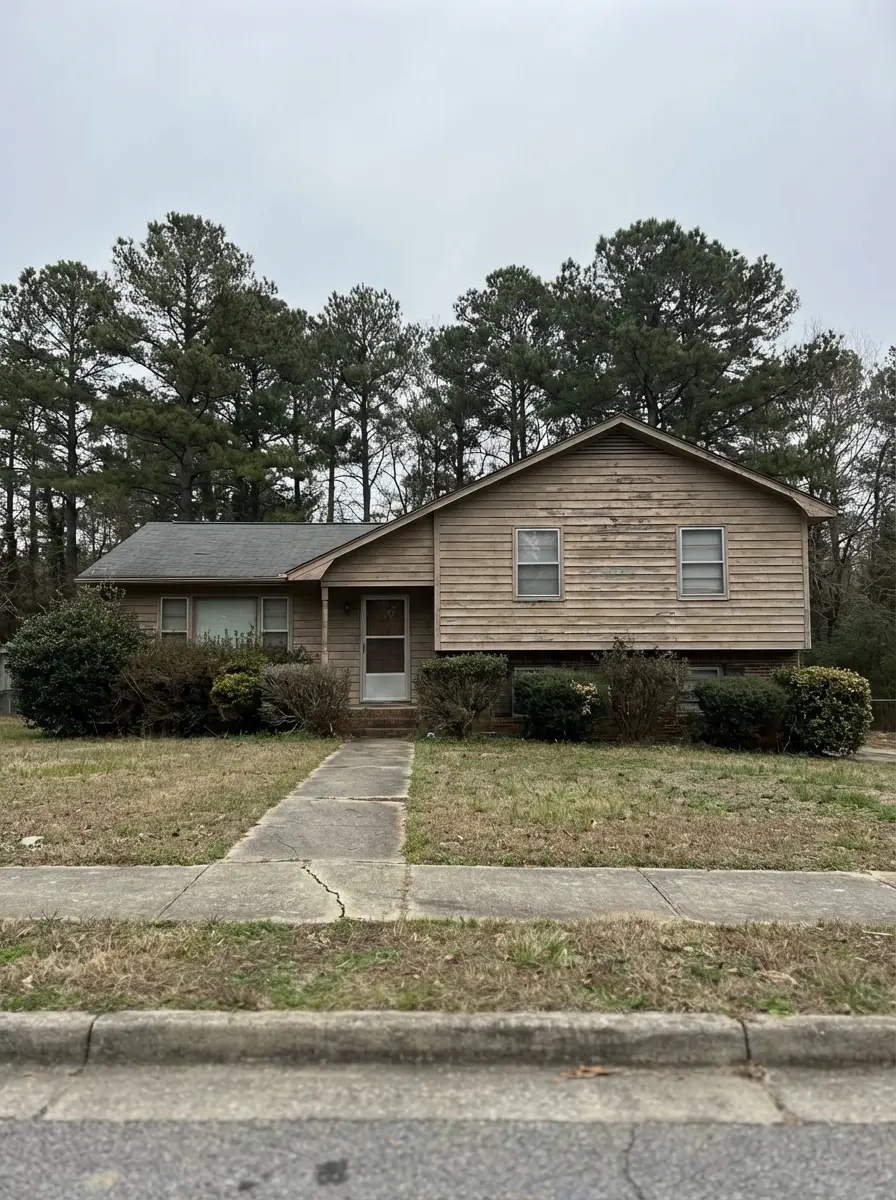
- South Kinston / Neuse River corridor — The most flood-affected area. Properties here have the most significant flood histories and the toughest time selling traditionally. We buy here.
- Queen Street / Downtown adjacent — Mixed flood zone impact. Some blocks affected, some not. Proximity to downtown adds value even with flood designation.
- Vernon Avenue / North Kinston — Stormwater drainage issues cause flooding even away from the river. Properties with repetitive loss status are common.
- Hwy 70 corridor — Lower flood risk in some spots, higher in others. FEMA maps show the variation block by block.
- La Grange / Pink Hill / Rural Lenoir County — Agricultural areas with their own flood dynamics. Neuse River impacts extend well beyond city limits.
The Honest Bottom Line for Kinston Flood Zone Sellers
Owning a house in a Kinston flood zone is hard. Selling one through traditional channels in 2026 is often harder. The insurance costs, the disclosure requirements, and the limited buyer pool create a combination that the MLS process isn't designed to handle.
Cash doesn't make the flood zone disappear. It doesn't erase the history or eliminate the risk. What it does is give you a path to sell a property that the traditional market has effectively written off. Two weeks from offer to closing. No insurance hurdles. No buyer who panics at the disclosure form. Just a price that reflects reality and a check that clears.
If you want to see what your specific Kinston flood zone property is worth in a cash sale, here's how we calculate the numbers. Reach out. No obligation. I'd rather show you an honest number than let you carry a vacant flood zone property for another year.