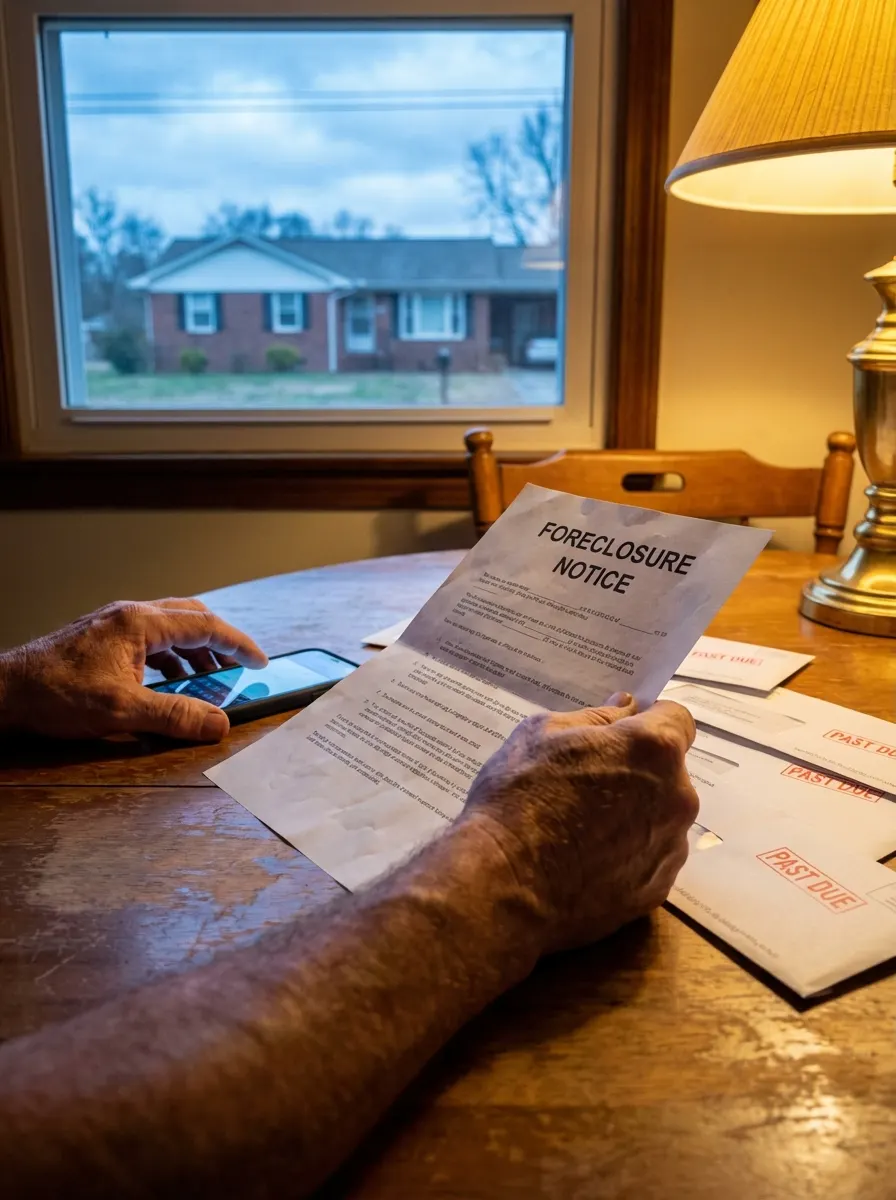
You opened the envelope. Or maybe someone told you about it. Either way, you now know there's a foreclosure notice in Wake County with your name on it, and your stomach hasn't settled since. The words on the page don't quite feel real. But the fear does.
Take a breath. You are not out of time. Not yet.
I know what you're feeling right now because I hear it every week. Homeowners in Raleigh, Cary, Apex, and across Wake County call me after opening that exact letter. The same tight voice. The same question: "What do I do now?"
That question means you haven't given up. It means you're looking for a way through this. And there is one. If any of this sounds familiar, keep reading.
What Does a Foreclosure Notice in Wake County Actually Mean?
Getting that letter feels like the end. But legally, it's closer to the beginning. Understanding where you actually stand takes some of the fear away. So let's walk through it.
In North Carolina, most foreclosures happen through what's called a power of sale process. This is governed by NC General Statute 45-21.16. It means your lender doesn't need a judge to start the foreclosure. They file paperwork with the Wake County Clerk of Superior Court, and the process moves from there.
But here's what most people don't know: that filing triggers a hearing. Before your home can be sold at auction, a clerk must hold a hearing. And you get at least 45 days' notice before that hearing happens.
That 45-day window is your window. It's the time when you still hold power. The deed is in your name. The house is yours. And the decisions about what happens next are still yours to make.
Most homeowners I talk to in Wake County assume the letter means they've already lost. It doesn't. It means the clock has started. But the clock hasn't run out.
Under NC G.S. 45-21.16, you must receive at least 45 days' notice before a foreclosure hearing at the Wake County Clerk of Superior Court. During that window, you can sell, negotiate, or take legal action to stop the sale.
Why Does It Feel So Hard to Take the Next Step?
Here's something nobody talks about. The hardest part of a foreclosure notice isn't the legal process. It's the shame.
You bought this home with real plans. You imagined a future inside it. Now there's a letter telling you it might be taken away, and everything in you wants to pretend it's not happening.
Maybe you haven't told your family. Maybe you've stopped opening mail. Maybe you've told yourself that if you just wait a little longer, something will change.
I'm not here to judge any of that. I've sat across from hundreds of homeowners in Wake County who felt exactly the same way. Teachers. Nurses. Small business owners. Retired couples. People who did everything right until life handed them something they didn't plan for.
This is not a character flaw. It is a financial situation. And financial situations have solutions.
“I was three months behind on my mortgage and panicking. Ryan gave me a fair offer and we closed before the foreclosure sale date.” — Sandra K., Raleigh
What Are Your Options After Getting a Foreclosure Notice in Wake County?
You have more choices than you think. Let me lay them out honestly.
Reinstate the loan
If you can pay the full amount you're behind, including late fees and any legal costs your lender has racked up, you can bring the mortgage current. This stops the foreclosure completely. If the hardship was temporary and you've recovered, this is the cleanest path.
Request a loan modification
Contact your lender and ask to change your loan terms. A lower interest rate, a longer repayment period, or rolling the missed payments into the back end of the loan. Some lenders will agree. Some won't. But it costs nothing to ask, and you should ask soon. The further along the process gets, the less willing they are to negotiate.
File for forbearance
This is a temporary pause on payments. Your lender agrees to give you breathing room while you get back on your feet. You'll still owe everything, but it buys you time. You'll need to show them a plan for catching up.
Sell your home before the hearing
This is the option that surprises most people. You can sell your home at any point before the foreclosure sale is finalized. In Wake County, that means you can sell during the 45-day notice period, and even after the hearing if the sale hasn't happened yet.
When you sell on your terms, you pay off the mortgage with the proceeds, keep whatever equity is left, and walk away with your credit in far better shape than a completed foreclosure.
A traditional listing takes 60 to 90 days on average. If your timeline is tighter than that, a direct cash sale can close in as little as seven days. No repairs, no showings, no waiting for buyer financing.
Contest the foreclosure at the hearing
At the clerk's hearing, you can raise objections. Maybe the lender didn't follow proper notice procedures. Maybe there are errors in the amount owed. An attorney who handles foreclosure defense in Wake County can review your case and advise whether contesting the hearing makes sense.
Why Selling Before Foreclosure Is the Smart Move, Not the Defeated One
I understand why selling feels like giving up. You worked hard for this home. Walking away from it isn't what you planned.
But let me reframe what actually happens in each scenario.
If foreclosure goes through, your credit drops 100 to 150 points. That mark stays on your report for seven years. Renting becomes harder. Buying another home later becomes harder. And you walk away with nothing. The bank takes the house. Your equity goes to cover their costs. Whatever's left, if anything, gets tied up in legal proceedings.
If you sell before the foreclosure completes, you keep the equity above what you owe. Your credit takes a much smaller hit. You choose the closing date. You choose where you go next. You move forward on your terms.
One of those paths is something that happens to you. The other is a decision you make. There's a real difference between the two.
| Outcome | Foreclosure Completes | Sell Before Foreclosure |
|---|---|---|
| Credit Impact | 100–150 point drop, stays 7 years | Much smaller hit, recovers faster |
| Equity | Lost — bank takes it all | You keep everything above what you owe |
| Timeline | Bank controls the process | You choose the closing date |
| Future Home Purchase | 3–7 year waiting period | No foreclosure on record |
| Who Decides | The bank | You |
How Have Other Wake County Homeowners Handled This?
At Cinch Home Buyers, we've purchased over 200 homes across North Carolina. Many of those were from homeowners in Wake County who were behind on their mortgage and running out of time.
I've worked with families in Raleigh, Garner, Knightdale, and Fuquay-Varina who called us after receiving their foreclosure notice. In some cases, we closed in under two weeks. In others, the homeowner needed more time and we worked around their schedule.
Every situation is different. But the pattern is the same. The homeowners who reach out early have the most options. The ones who wait until the hearing date is tomorrow have fewer choices and less time to make them.
We know how Wake County's process works. We've dealt with the Clerk of Superior Court's office, local title companies, and lender payoff departments many times. We buy with cash, so there's no financing delay. No appraisal contingency. No risk of a deal falling through at the last minute.
What Should You Do Right Now?
If you're holding a foreclosure notice in Wake County, here's the truth: the worst thing you can do right now is nothing. Every day that passes shrinks your window.
You don't have to make a decision today. You don't have to explain your situation to anyone. You just need to find out where you stand.
Filling out our quick form takes about 60 seconds. We'll review your property and get back to you with a fair cash offer within 24 hours. No obligation. No pressure. Just a straight answer about what your options look like.
If selling makes sense for your situation, we can close on your timeline. If it doesn't, I'll tell you that too. I'm not here to talk you into anything. I'm here so you have the information you need to make the right call for your family.
We buy houses across Wake, Johnston, and Durham counties, and we can move on your timeline. Whether that's seven days or sixty. You decide.
You found this page because you were looking for answers. That took courage. Now take the next step.
Frequently Asked Questions
Under NC G.S. 45-21.16, you must receive at least 45 days’ notice before the foreclosure hearing at the Wake County Clerk of Superior Court. During that window, you can sell your home, negotiate with your lender, or take legal action to stop the sale.
Yes. You can sell your home at any point before the foreclosure sale is finalized. A cash buyer can close in as few as 7 days, which fits well within the 45-day notice period. You pay off the mortgage from the proceeds and keep any remaining equity.
A completed foreclosure typically drops your credit score by 100–150 points and remains on your credit report for 7 years. Selling before the foreclosure completes results in a much smaller credit impact and no foreclosure on your record.
In a foreclosure, the bank takes and sells your property. In a short sale, you sell for less than what you owe with the lender’s approval. If you have equity in your home, you can sell at market value (or to a cash buyer) and avoid both scenarios entirely.
Yes. We buy homes from homeowners in pre-foreclosure regularly across Wake County. We work with title companies and lender payoff departments to ensure a clean closing. You get your equity, the mortgage gets paid off, and there is no foreclosure on your record.