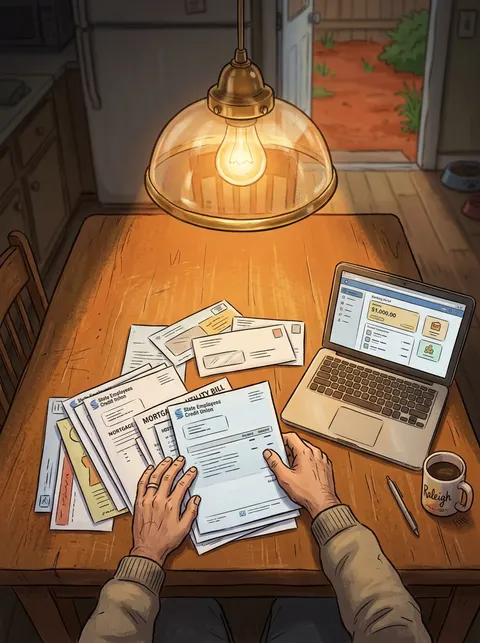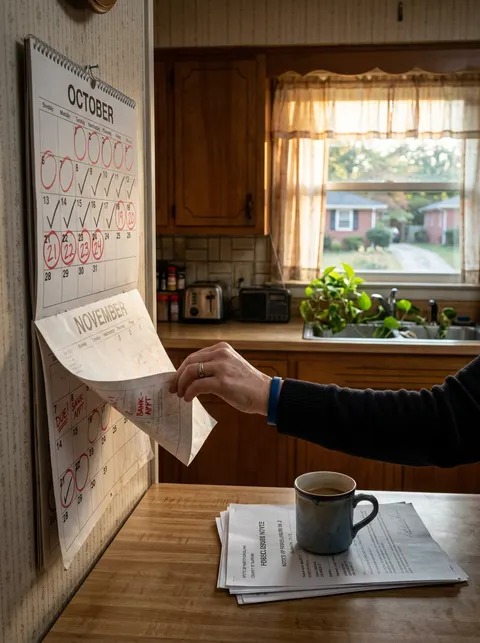
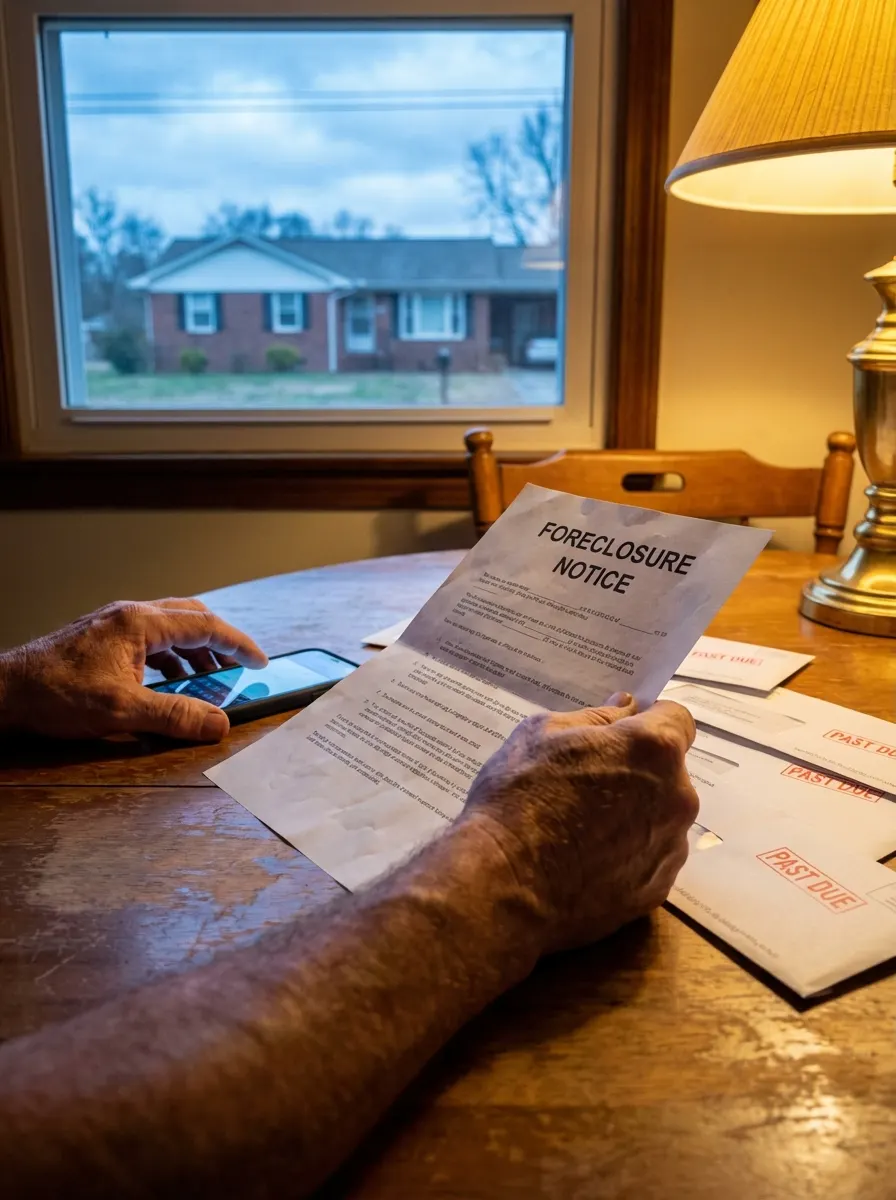
The notice is on the kitchen counter. A foreclosure hearing date is set. And right now, you're wondering if it's too late to do anything about it.
It's not. Not yet.
I've bought houses in Raleigh, Charlotte, and Fayetteville where the seller was weeks away from the auction date. Some were days away. In every single case, we were able to close before the hammer dropped — because the law allows it. Until that foreclosure sale is completed, you can sell your house. It's still yours.
But the window is narrow, and it gets narrower every day you don't act. Here's exactly how this works in North Carolina.
The NC Foreclosure Timeline — Where You Are Right Now
North Carolina uses a "power of sale" foreclosure process. That means your lender doesn't have to go through a full lawsuit to take the property. They go through the Clerk of Superior Court, and the process moves faster than you'd think.
Here's the timeline, step by step:
Stage 1: Notice of Default (Day 1-90)
You missed payments. The lender sent letters, made calls, and eventually filed a formal Notice of Default. In North Carolina, they must also send a notice of your right to cure — you can pay what's owed to stop the process. This is the easiest window to sell in, and the one most people waste waiting for things to "get better."
Stage 2: Notice of Hearing (Day 60-120)
The lender's attorney files a petition with the Clerk of Superior Court in your county. In Wake County, that's the courthouse on Fayetteville Street downtown. In Cumberland County (Fayetteville), it's on Gillespie Street. You'll receive notice of a hearing date — typically 10-30 days out.
At this point, you still own the house. You can still sell it. But the clock is loud now.
Stage 3: Clerk's Hearing
The Clerk reviews whether the lender followed proper procedure. If everything checks out, the Clerk authorizes the sale. After the hearing, there's a mandatory 20-day waiting period before the actual auction. This is your last reliable window.
Stage 4: Foreclosure Auction
The property is sold at public auction — typically at the county courthouse steps. The highest bidder wins. If the sale price doesn't cover your mortgage balance, you could face a deficiency judgment for the remainder. If there's equity above the payoff, it goes to you — but the auction rarely maximizes price. Properties sell at significant discounts at auction.
After the auction, there's a 10-day upset bid period where higher bids can be submitted. Once that closes, the sale is confirmed and the deed transfers. At that point, it's over.
You Can Sell at Any Point Before the Auction — Here's How
This is the part that most people don't realize. Even after the Notice of Hearing. Even after the Clerk authorizes the sale. Even during the 20-day pre-auction period. You can sell your house.
The process looks like this:
Step 1: Get an accurate payoff amount. Call your lender (or have your attorney call) and request a current payoff statement. This includes the principal balance, accrued interest, late fees, and the lender's attorney fees. This number is almost always higher than you expect — sometimes by $5,000-10,000. You need this number to know if a sale makes financial sense.
Step 2: Get a cash offer. The MLS isn't an option when you're three weeks from an auction. Listing, marketing, showings, buyer financing — that timeline doesn't fit. A cash buyer can make an offer in 24 hours and close in 7-14 days. That's your realistic path forward.
Step 3: Compare the numbers. Cash offer minus payoff amount = your equity. If there's equity to protect, selling beats losing the house at auction. If you're underwater, a short sale (with lender approval) may be possible, or you may need to negotiate with the lender directly.
Step 4: Close before the auction date. Your closing attorney contacts the lender's attorney to coordinate. The sale proceeds pay off the mortgage, fees, and taxes. You keep whatever's left. The foreclosure process stops because there's nothing left to foreclose on.
In North Carolina, you retain full ownership of your property until the foreclosure sale is completed AND the upset bid period has passed. You can sell, lease, or transfer the property at any point before that. No one — not the bank, not their attorney, not a court — can prevent you from selling your own property before the auction. If anyone tells you otherwise, they're wrong or they're trying to scare you into inaction.
Why a Cash Sale Is the Only Realistic Option This Close to Auction
I'll be blunt. If your auction date is 30 days away or less, the MLS isn't going to save you. Here's why:
- MLS listings take 25-45 days just to go under contract in NC, plus another 30-45 days for buyer financing and closing. That's 55-90 days. You don't have 55 days.
- Buyers get scared. When a listing discloses active foreclosure proceedings, MLS buyers either walk away or lowball aggressively. They know you're under pressure.
- Financing falls through. Even if you find a buyer, their bank might balk at a property in pre-foreclosure with clouded title issues. Conventional and FHA lenders are conservative — they don't like closing on properties with pending legal actions.
- Contingencies kill time. Inspection contingencies. Appraisal contingencies. Financing contingencies. Every one of them adds days or weeks you can't afford.
Cash eliminates all of that. No financing to fall through. No appraisal to come in low. No inspection contingency that gives the buyer an out at day 12. I wire funds to the closing attorney. The attorney pays off the lender. Deed transfers. Done.
I've closed pre-foreclosure purchases in 8 days. Not because we cut corners — because there are no corners to cut when there's no bank in the middle.
"The bank gave me 90 days. Cinch closed in 12. I avoided foreclosure and walked away with equity I thought was gone." — Andre P., Durham
What Happens to Your Equity at Auction vs. a Private Sale
This is the math that should keep you up at night if you're not acting.
Say your house is worth $280,000 on the open market. You owe $200,000 including all fees. That's $80,000 in equity.
At a foreclosure auction: Properties typically sell at 60-75% of market value. Your house might bring $180,000-210,000. After the mortgage payoff, you're left with $0-10,000 — if anything. Some auctions don't even cover the payoff. Then you get hit with a deficiency judgment.
With a pre-auction cash sale: A fair cash offer might be $235,000-250,000 (80-90% of market value, depending on condition). After the $200,000 payoff, you walk with $35,000-50,000. That's real money. That's a security deposit on a rental, three months of breathing room, and a fresh start.
The difference between those two outcomes is the difference between calling me today and waiting until the auction makes the decision for you.
| Factor | Foreclosure Auction | Pre-Auction Cash Sale |
|---|---|---|
| Sale price vs. market value | 60-75% | 80-90% |
| Seller controls timeline | No | Yes |
| Credit impact | Foreclosure on record (7 years) | No foreclosure reported |
| Deficiency judgment risk | High | None |
| Time to close | Set by court schedule | 7-14 days |
| Equity retained | $0-10K typical | $35K-50K typical |
County-by-County: How Fast Foreclosures Move in NC
Wake County (Raleigh): High volume. The Clerk's office on Fayetteville Street processes foreclosure hearings efficiently. Once the hearing is scheduled, expect 3-4 weeks before the sale date. The courthouse steps sale happens on the first floor. Wake County auctions often draw investor bidders who know the market.
Mecklenburg County (Charlotte): Charlotte's volume is even higher. The Clerk's office at the courthouse on East Fourth Street handles a steady docket. Timeline is similar — 20-30 days from hearing authorization to sale. Charlotte auction prices tend to be competitive because investor demand is strong.
Cumberland County (Fayetteville): Military town with a higher-than-average foreclosure rate. The courthouse on Gillespie Street processes these regularly. Fort Liberty PCS moves sometimes trigger defaults when families can't sell before their next station. Auction prices here tend to be lower relative to market value because investor competition is thinner than in Raleigh or Charlotte.
In every county, the critical window is the same: once the Clerk authorizes the sale, you have 20 days minimum. In practice, it's often 25-35 days. That's enough time for a cash close — barely. Don't wait until day 18.
What to Do Right Now
If you're reading this and a foreclosure hearing is on your calendar, here's your action list. Today. Not next week.
- Call your lender. Get the current payoff amount including all fees. Write it down.
- Call a HUD-approved housing counselor. Free advice, no strings. They'll tell you if any assistance programs apply to your situation.
- Get a cash offer.Contact Cinch Home Buyers or another legitimate local cash buyer. Get a real number within 24 hours.
- Do the math. Cash offer minus payoff = your equity to save. If there's equity, sell before the auction takes it.
- Talk to a closing attorney. They can advise on the foreclosure timeline in your specific county and coordinate with the lender to stop the process once a sale is underway.
The auction is a deadline, not a destiny. You still have options — but they're measured in days and weeks now, not months. Every day you wait is a day the lender's attorney fees grow, your equity shrinks, and the window gets smaller.
I've sat at closing tables with sellers who called me with two weeks to spare. They walked out with equity they would have lost at auction. That's not a sales pitch — that's arithmetic. And it only works if you make the call while there's still time.
Frequently Asked Questions
Yes. You can sell your house at any point until the foreclosure sale is completed and the upset bid period has passed. Even after the Clerk of Superior Court authorizes the sale, you retain ownership and the right to sell. A cash sale can close in 7-14 days, which typically fits within the foreclosure timeline.
After the Clerk of Superior Court authorizes the sale, there's a mandatory 20-day waiting period before the auction. From the first missed payment to auction typically takes 4-8 months total, depending on the lender and county. The 20-day pre-auction window is your last reliable opportunity for a private sale.
Only if the auction price exceeds your total mortgage payoff (including fees and penalties). Foreclosure auctions typically sell at 60-75% of market value. If the proceeds exceed your payoff, you receive the surplus. If they don't, you may face a deficiency judgment for the difference. A private cash sale almost always nets you more equity than an auction.
Yes. When you sell the property, the sale proceeds pay off the mortgage in full, which eliminates the lender's basis for foreclosure. Your closing attorney coordinates with the lender's attorney to ensure the payoff is applied and the foreclosure proceedings are withdrawn.
If you're underwater, a short sale may be possible -- this requires lender approval to accept less than the full balance. Short sales take longer (60-120 days) but are far less damaging than foreclosure. Contact your lender and a HUD-approved housing counselor to explore this option immediately.
Yes. We regularly close pre-foreclosure purchases across North Carolina. We coordinate with closing attorneys and lenders to ensure payoffs are handled correctly and closing happens before the auction date. We can close in as few as 7 days when the timeline requires it.