
“The last tenant moved out and left the place trashed.” That is how a lot of North Carolina landlords put it: holes in the drywall, carpet that has to come out, trash in every room. You can fix it and rent it again, fix it and sell it, or sell it the way it sits.
Selling as-is is one of those choices, and it isn’t always the right one. Whichever you pick, the deposit rules below still apply. If you want an as-is number to compare against your repair quotes, Get My Free Cash Offer or call (919) 751-6768.
I’m not an attorney, and this is general information, not legal advice. The deposit rules below come from the NC Tenant Security Deposit Act, G.S. 42-50 to 42-56. How they apply to your lease and your facts is a question for a North Carolina real estate attorney.
Step 1: Document the Damage Before Anything Gets Cleaned
Do this before a contractor, a clean-out crew, or you start hauling things to the curb. Once the place is cleaned up, the evidence is gone.
If the tenant left belongings behind, or you aren’t sure they have given up possession, don’t throw anything out or change the locks on your own judgment. In North Carolina a residential tenant can normally be removed only through the court process (G.S. 42-25.6). Ask an attorney first.
Step 2: What the Security Deposit Can Cover in NC
G.S. 42-51 lists what a landlord may apply a residential security deposit to. In plain terms:
- Unpaid rent, and unpaid water or sewer charges
- Damage to the premises, including damage to or destruction of smoke alarms
- Damages from the tenant not fulfilling the rental period
- Unpaid bills that become a lien against the property
- The cost of re-renting after the tenant breaches the lease
- Removing and storing the tenant’s property after a summary ejectment
- Court costs
- Certain fees allowed by G.S. 42-46
You may not charge the deposit for normal wear and tear, or keep more than your actual damages (G.S. 42-52). The deposit is also capped, at two months’ rent for terms longer than month-to-month (G.S. 42-51(b)), which seldom stretches to cover drywall, flooring and the haul-off on a truly trashed house.
Step 3: The Deposit Deadline, and Damage Beyond It
No later than 30 days after the tenancy ends and you get possession back, you must mail or deliver to the tenant a written itemization of the damage, together with any balance of the deposit (G.S. 42-52). If you can’t price the damage that fast, send an interim accounting by day 30 and a final one within 60 days. If you don’t know where the tenant went, apply the deposit as permitted after 30 days and hold any balance for the tenant for at least six months.
Don’t skip the accounting because the damage plainly exceeds the deposit. Under G.S. 42-55, a landlord’s willful failure to comply voids the right to keep any part of the deposit, and the court may award the tenant attorney’s fees.
For damage beyond the deposit, a landlord can usually pursue the former tenant for the difference, and a claim of $10,000 or less can be heard in small claims court (G.S. 7A-210). A judgment is not a check, though: collecting depends on what the former tenant has. A North Carolina attorney can tell you whether a claim is worth filing.
If the Tenant Is Still in the House
In North Carolina, removing a residential tenant normally runs through summary ejectment, a court case usually heard by a magistrate in small claims court (G.S. 42-26 and following). Changing the locks or shutting off utilities to force a tenant out is not a substitute, because G.S. 42-25.6 requires the court process. Talk to a North Carolina attorney before you serve notice or file.
A house can normally be sold with the tenant still in it. See our guides to selling a house with bad tenants in NC and selling a rental with the tenants in place.
Repair, Re-Rent, or Sell As-Is: Side by Side
It turns on how deep the damage goes, how much cash and patience you have, and whether you still want to be a landlord. There are no dollar figures here on purpose: get written quotes for your own house.
| Repair and re-rent | Repair and list | Sell as-is for cash | |
|---|---|---|---|
| Cash you put in first | Full repair cost plus turnover costs | Full repair cost plus listing prep | Nothing for repairs or cleaning |
| Before money comes back | Repairs, then finding and screening a tenant | Repairs, then showings and a buyer’s financing | The closing date you pick |
| Who handles the mess | You and your contractors | You and your contractors | The buyer |
| Main risk | The next tenant and the next turnover | Repair overruns and inspection requests | A lower price than a repaired house |
| Usually fits when | You want to keep the rental and have reserves | The damage is cosmetic and you can fund it | You’re done being a landlord or can’t fund repairs |
Questions to answer before you pick
- What do two written contractor quotes say, and how much would you add for surprises once walls and floors are opened up?
- How many months of mortgage, taxes, insurance and utilities will you carry while the work gets done? See the hidden cost of holding a rental in NC.
- Do you want to screen another tenant for this house?
Raleigh landlord? See our guide to selling a damaged rental property in Raleigh.
What Selling As-Is to a Cash Buyer Looks Like
Selling as-is means the house goes the way the tenant left it. With Cinch, in most cases you don’t patch the drywall, replace the carpet or clean first. If the former tenant’s belongings are still inside, ask an attorney how to handle them before closing. After we call to confirm the details, you get a written cash offer within 24 hours, and you pick the closing date: as fast as 7 days, or 60 if you need time. A North Carolina closing attorney handles the title search, documents and disbursement, and you walk away with the offer minus your mortgage payoff and any liens on the property.
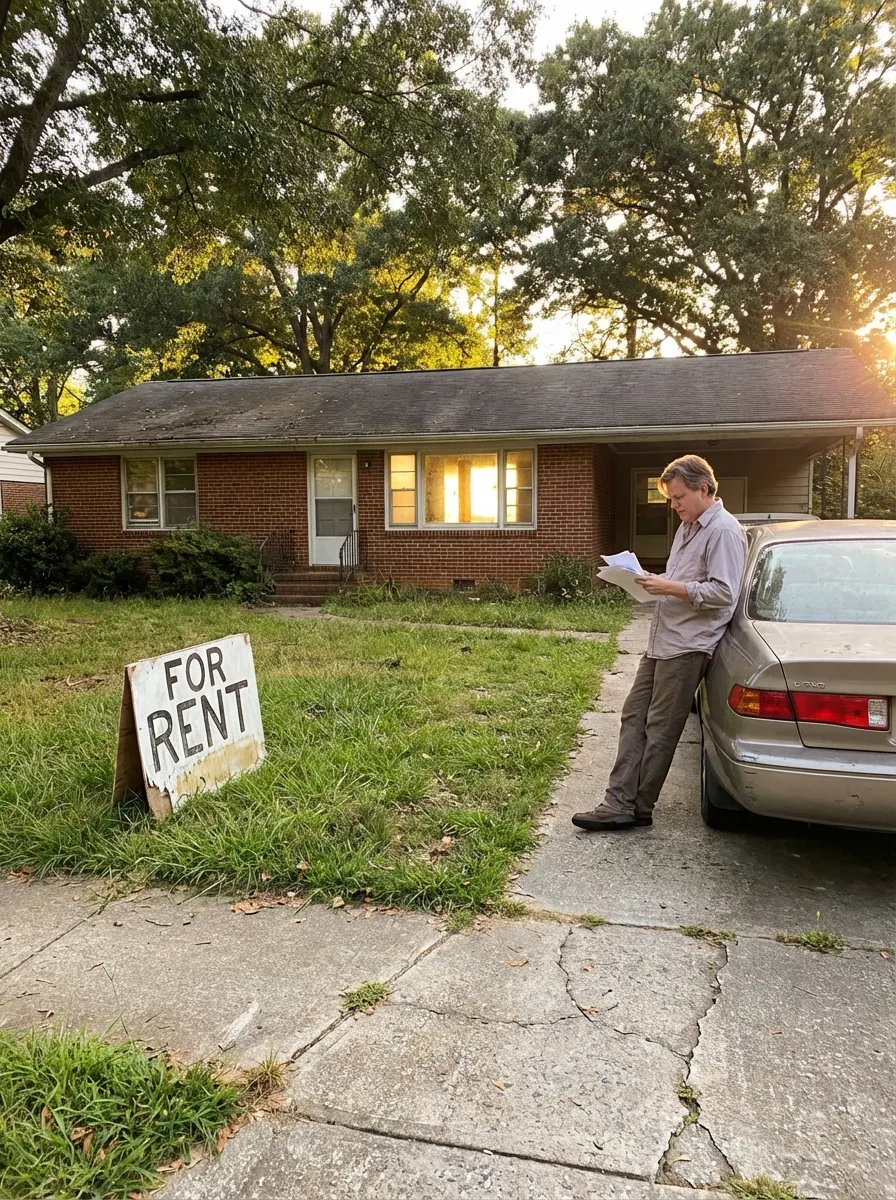
The trade-off is real. An as-is price reflects the work the house needs, so it will normally be lower than what the same house would bring fully repaired on the open market. See how selling a house for cash works in NC, or use the cash offer calculator for a quick range.
Frequently Asked Questions
Yes. Selling as-is to a cash buyer means the house goes the way the tenant left it. With Cinch there are normally no repairs, no cleaning, no fees and no commissions, and you pick the closing date. If the former tenant's belongings are still inside, ask an attorney how to handle them before closing.
Normally, yes. The accounting is owed to the former tenant after the tenancy ends and you get possession back, whether or not you sell. Finish it on time and keep a copy with your photos and repair quotes.