

If you inherited land in Durham County, you can almost always sell it — and often sooner than you think. Under North Carolina law, title to real estate vests in the heirs or devisees at the moment of death (N.C. Gen. Stat. 28A-15-2), not after the estate file closes. What probate controls is who must sign the deed and what steps protect the sale from estate creditors. Those steps run through the Durham County Clerk of Superior Court, and they're more manageable than the paperwork makes them look. Here's the process in plain English, and why Durham's infill demand makes inherited lots easier to sell for cash than most heirs expect.
Can You Sell Inherited Land Before Probate Closes? Usually, Yes
Because title passes to heirs at death, the estate doesn't have to be fully settled before the land can change hands. The practical rules, under Chapter 28A of the North Carolina General Statutes, come down to three situations:
- There's a will that gives the executor a power of sale. The executor can sign the deed and the sale proceeds through the estate.
- There's a will without a power of sale, or no will at all. The heirs themselves own the land and all of them sign the deed. Within two years of the death, the personal representative typically joins the deed as well, because Chapter 28A lets estate creditors reach real property sold by heirs during that window if the estate can't cover its debts.
- The estate needs the land's value to pay debts. The personal representative petitions the Clerk of Superior Court for authority to sell — a special proceeding the clerk's office handles routinely.
Which lane you're in determines who signs, not whether you can sell. A closing attorney reads the estate file and answers that question quickly. None of this is legal advice — an NC probate attorney is the right person for edge cases — but it's the framework nearly every Durham heir sale fits into.
How the Durham County Clerk Process Works
In North Carolina, probate doesn't go through a separate probate court. The Clerk of Superior Court serves as the judge of probate (N.C. Gen. Stat. 7A-241), and in Durham that means the estates division of the Durham County Clerk of Superior Court at the county courthouse. The basic sequence: the will (if there is one) is filed, the clerk issues letters testamentary or letters of administration naming the personal representative, and the estate is inventoried and administered from there.
Two local references worth bookmarking: our Durham County probate and real estate guide covers the county filing process step by step, and our breakdown of the NC probate timeline for selling a deceased parent's land maps how long each stage actually takes. The short version: the clerk's office is procedural, not adversarial. Estates with cooperative heirs and no creditor fights move through it on paper, not in hearings.
Why Buyers Want Durham Lots: Teardown and Infill Demand
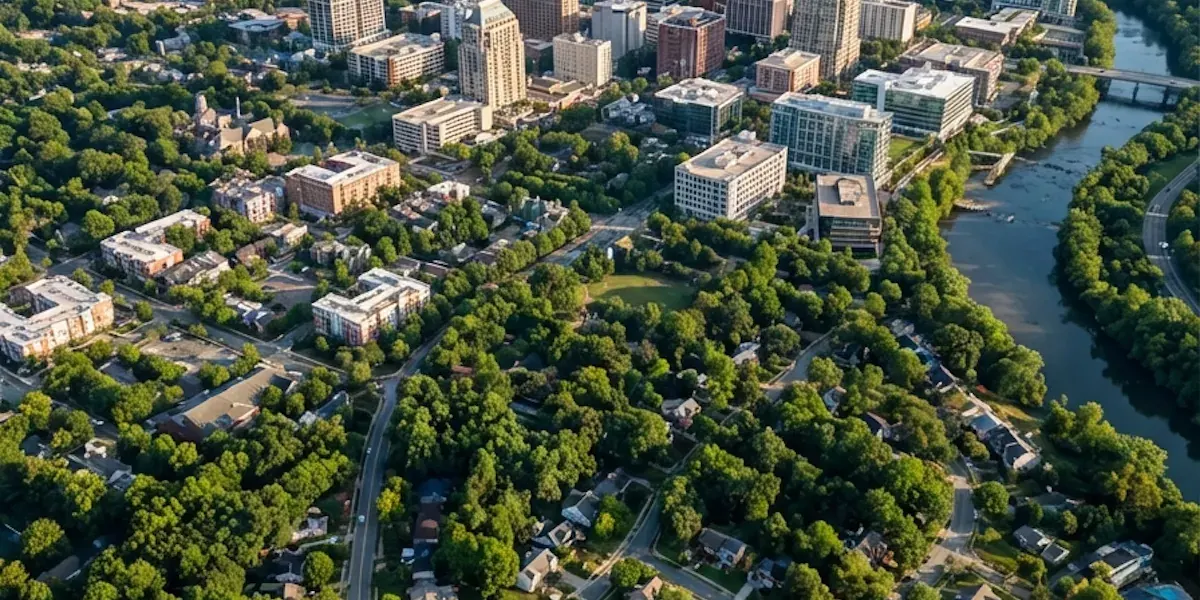
Durham's growth has run out of easy dirt close to town. Builders working inside the city and the county's first ring look for two things: infill lots in established neighborhoods where one new house can go up between two old ones, and teardown candidates — parcels where the structure is past saving but the lot, the street, and the utilities are exactly right. Inherited property is disproportionately both. Land that sat in a family for decades tends to sit in the older, closer-in areas that infill builders target — the same pattern that plays out just west in Chapel Hill and Hillsborough.
That demand is measurable on our side of the table: our buyer network includes 344 registered land buyers across North Carolina (Cinch CRM, June 10, 2026), and Durham County requests are consistently near the top of the list, right alongside neighboring Raleigh. If you want the county-level picture — what kinds of parcels move and how the process works locally — our Durham County land page covers it.
What Makes Heir Land Hard to Sell the Normal Way
Listing an inherited lot on the MLS runs into friction that has nothing to do with the land's value. Every co-heir has to agree on the agent, the price, and every signature — hard when siblings live in three states. Vacant land listings get a fraction of the attention houses get, because the commission on a lot rarely justifies an agent's months of work. And the eventual buyer usually needs financing, which is scarce for raw land — banks treat vacant lots as risky collateral, so deals lean on cash anyway.
Meanwhile the carrying costs don't pause. Durham County property taxes keep accruing to the heirs, the lot needs mowing or it draws code complaints, and an empty parcel is a liability nobody in the family wanted. That's the gap a direct cash sale closes: one negotiation, one closing, every heir signs once, done.
How a Cash Sale of Inherited Durham Land Works
Our process is built around the estate rather than pretending it isn't there:
- Within 24 hours: You give us the parcel location and what you know about the estate. We research the lot and send a written cash offer.
- Title and estate review: A North Carolina closing attorney pulls the deed, reads the estate file at the Durham County courthouse, and confirms who must sign — executor, heirs, or both. We coordinate signatures for out-of-state heirs; nobody has to fly in.
- Closing: Once the signing authority is clear, we close in 7-14 days. The deed records with the Durham County Register of Deeds, proceeds wire from the attorney's trust account, and we charge $0 in fees.
The same playbook applies to any parcel in the state — our guide to selling North Carolina land fast has the full statewide version. Cinch has bought 250+ properties across North Carolina and holds a 4.9 rating on Google; inherited property is a large share of what we buy, so the estate wrinkles that scare off other buyers are Tuesday for our closing attorneys.
Frequently Asked Questions
Can I sell inherited land in Durham before probate is finished?
Usually, yes. North Carolina law vests title to real estate in the heirs at the moment of death (N.C. Gen. Stat. 28A-15-2), so the estate does not need to be closed first. Within two years of the death, the personal representative typically joins the deed to protect the buyer from estate creditor claims under Chapter 28A. A closing attorney confirms the exact signers from the estate file.
Do all heirs have to agree to sell inherited land in North Carolina?
Yes — every co-owner must sign the deed. If one heir refuses, the others cannot sell the whole parcel without a court partition proceeding. In practice, a concrete written cash offer is often what gets a stalled family to a decision, because it replaces arguments about hypothetical value with an actual number.
Does North Carolina charge inheritance tax on land?
No. North Carolina repealed its estate tax in 2013 and has no inheritance tax, so the state takes nothing for the inheritance itself. The sale deed carries the standard NC excise tax of $1 per $500 of the price, and any capital gains question depends on the property’s stepped-up basis — ask a tax professional about your specific numbers.
The deed is still in my parents’ names. Can I sell?
Yes. The deed staying in a deceased parent’s name is normal — title passed to the heirs by law even though the paper never changed. The closing attorney documents the chain of ownership through the estate file and the death certificate, and the new deed goes from the heirs (and personal representative, when required) to the buyer.
How fast can inherited land in Durham close?
Once the estate paperwork establishes who signs, we close in 7-14 days like any other cash purchase. If letters of administration still need to be issued by the Durham County Clerk of Superior Court, that step adds time up front — but the offer can be made and accepted while it is pending.