
When we talk with North Carolina landlords about buying a rental house, two objections come up often: “Your offer doesn’t account for the rent this property brings in,” and “The price has to reflect the money I put into fixing it up.”
Both are fair things to say. If a house has sent you a rent check every month for years, or you spent thousands keeping it running between tenants, you naturally judge its value by that rent check and those receipts. A cash home buyer prices the house from the other end: what the physical property is worth in updated condition today, minus the work it needs next, plus the legal and financial weight of whatever lease or tenant situation comes with the deed.
Here is how a cash offer on a North Carolina rental property is built, how leases and security deposits work at closing under state law, and when selling as-is makes more sense than funding another turnover.
I’m not an attorney, and this is general information, not legal advice. For advice on your lease, a summary ejectment filing, or a deposit accounting, talk to a North Carolina real estate attorney.
1. Why the Offer Is Built on the House’s Condition, Not Just the Rent
Large apartment buildings are priced on net rental income. Single-family houses and small rentals in North Carolina are different: their value is anchored to what nearby houses sell for, minus the work the house needs right now.
When a landlord tells us, “It rents for $1,450 a month like clockwork,” that shows the tenant pays on time. What it doesn’t pay for is the physical wear that builds up during a long tenancy:
- Big-ticket systems (capital items): A 20-year-old roof, an aging heat pump, crawl space moisture or joist damage, galvanized or polybutylene plumbing, or an older electrical panel. Rent checks don’t reset the clock on a roof or an HVAC unit.
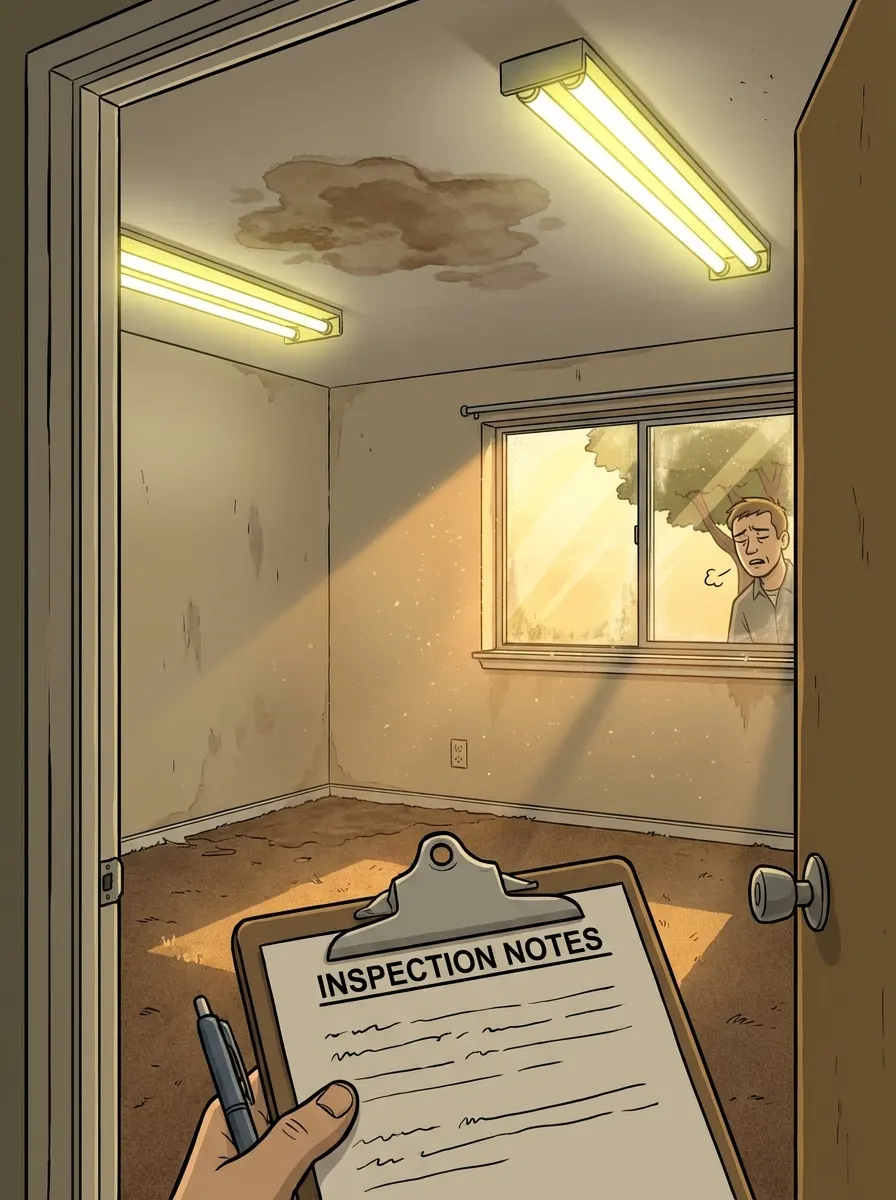
- Between-tenant turnover: Rental-grade carpet, scuffed walls, dated cabinets and vanities, worn appliances, and exterior rot or deck boards that a home inspector will flag on the open market.
What about the money you already put into fixing it up? If you replaced the roof or the heat pump last year, tell us — that directly reduces the work needed and helps your offer. By contrast, money spent four years ago repainting between tenants or replacing carpet that has since worn down kept the rent coming in then, but doesn’t reduce the work needed next. If the tenant has already moved out and left serious damage behind, see our guide to selling a house damaged by tenants in NC.
2. How an Active Lease in North Carolina Shapes the Price
Under North Carolina law (including N.C.G.S. § 42-8 and general conveyancing rules), a voluntary sale of a rental house does not cancel an existing valid lease. The buyer steps into your shoes as landlord on the lease terms you signed:
- Why traditional homebuyers walk away: Most retail buyers on the MLS use an FHA, VA, or conventional owner-occupant loan that requires moving into the home within 60 days of closing. If your tenant has seven months left on a fixed-term lease, an owner-occupant buyer cannot force the tenant out early just because the house sold.
- Below-market rent during the remaining term: Many North Carolina landlords keep good tenants by holding rent $300 to $500 a month below current market rates while county property taxes and insurance climb. A cash buyer who buys the house today is bound by that lease rate until the term expires.
- Month-to-month vs. fixed-term leases: Under N.C.G.S. § 42-14, a month-to-month residential tenancy can normally be ended with notice of seven days or more before the end of the current month (unless the written lease requires longer notice). A month-to-month lease gives a buyer far more flexibility than a long fixed-term lease at below-market rent.
3. When the Tenant Has Stopped Paying or Won’t Leave
When rent stops coming in or a tenant holds over past lease expiration, you cannot change the locks, shut off utilities, or remove a residential tenant’s belongings yourself — N.C.G.S. § 42-25.6 makes self-help eviction unlawful in North Carolina.
Removing a non-paying or holdover tenant requires summary ejectment through small claims court under N.C.G.S. Chapter 42, Article 3 (G.S. § 42-26 and following):
- Notice and filing: After any required notice (such as the 10-day demand under G.S. 42-3), the owner files a Complaint in Summary Ejectment.
- Magistrate hearing and 10-day appeal: After the magistrate enters judgment for possession, the owner must wait through the mandatory 10-day appeal window (G.S. 42-34) before requesting a Writ of Possession.
- Sheriff lockout and personal property: The county sheriff schedules the padlocking under G.S. 42-36.2, followed by the statutory window for the tenant to retrieve personal belongings.
When we buy a house with a holdover or non-paying tenant in place, we take that court timeline, the months of zero rent, and the risk of interior damage off your plate. Because we cannot start work until possession is legally returned, our cash offer accounts for that carry time. See our guide on selling a house with bad tenants or no lease in NC.
4. How the Security Deposit and Rent Proration Work at Closing
The NC Tenant Security Deposit Act (N.C.G.S. §§ 42-50 to 42-56) governs what happens to the tenant’s deposit when you sell. Under N.C.G.S. § 42-54, within 30 days after the sale closes, the seller must either:
- Transfer the deposit to the buyer: Turn over the deposit balance (after any lawful deductions under G.S. 42-51) to the new owner and notify the tenant by mail of the amount and the new owner’s name and address; or
- Return the deposit to the tenant: Refund the balance directly to the tenant with an itemized accounting.
In most cash closings on an occupied rental, the North Carolina closing attorney handles this right on the settlement statement by crediting the security deposit and prorated current-month rent from Seller to Buyer, and we assume the statutory obligation to account for the deposit under G.S. 42-52 when the tenant moves out. For every step from contract to payout, read what happens after you accept a cash offer in NC.
5. Compare the Net Check: Listing After Turnover vs. Selling As-Is
A cash offer is lower than the price a newly updated, vacant house brings on the MLS. The question for a landlord is what you actually keep after paying every cost required to reach that MLS price:
| Cost or Step | Vacate, Renovate, and List | Sell As-Is for Cash to Cinch |
|---|---|---|
| Current lease or tenant | Wait for lease to end or finish summary ejectment | Sell now with the tenant, lease, or vacancy in place |
| Turnover repairs & clean-out | You fund paint, flooring, roof/HVAC fixes, and haul-off | $0 — we take the house in its current condition |
| Vacant holding costs | 3–5 months of mortgage, taxes, insurance, and utilities | None past the closing date you pick (as fast as 7–14 days) |
| Agent commissions | Typically 5%–6% of the sale price | $0 commissions and $0 buyer fees |
| Buyer inspection credits | Retail buyer re-negotiates during NC due diligence | No appraisal and no repair requests after walkthrough |
Before you put $15,000 or $25,000 into a rental between tenants, add up the repair quotes, the vacant carry, and the commission. Our breakdown of the hidden cost of holding a rental property in NC walks through the monthly numbers. If you inherited a rental house with family members, see selling an inherited house with multiple heirs in NC. And if you own multiple rentals, see selling a rental portfolio in NC or use our cash offer calculator.
Frequently Asked Questions
Single-family rentals in North Carolina are valued on the house’s physical condition, nearby sales, turnover work, and any active lease, rather than gross rent alone. A house bringing in $1,400 a month that needs a roof, HVAC, and full turnover requires upfront capital that shapes an as-is cash offer.
Under N.C.G.S. § 42-54, within 30 days of selling a rental, the seller must either transfer the deposit balance to the buyer and notify the tenant by mail, or refund the balance to the tenant. In most cash closings, the closing attorney credits the deposit on the settlement statement.
Yes. We can give you a written cash range from the address, lease terms, and photos or maintenance details before anyone walks through. If we move forward, we schedule one low-key visit around your tenant’s notice rights.
We can price each house individually and also give you one combined number for the set, so you can sell all of them at once or only the ones that need the most work.